

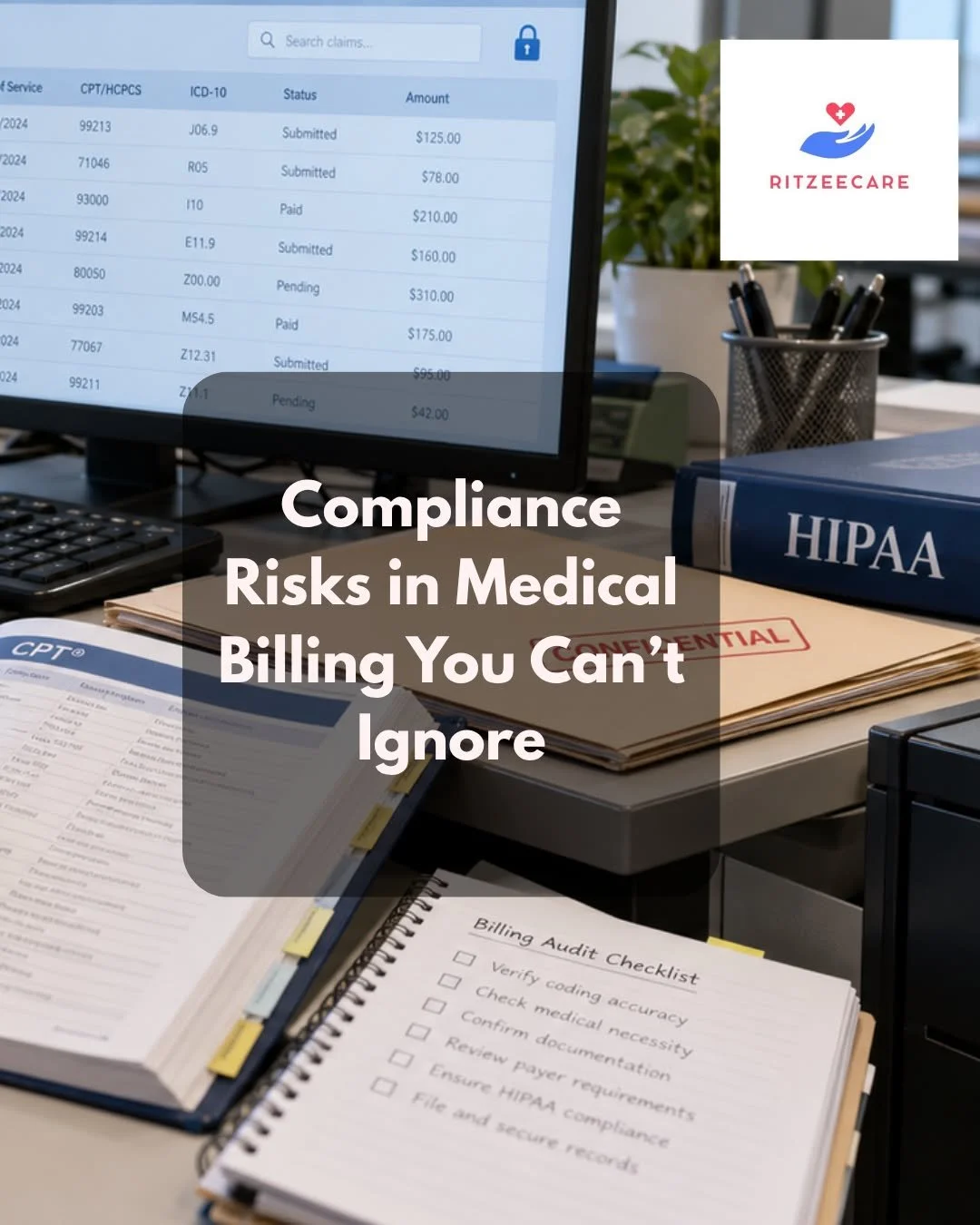
Medical billing compliance affects more than reimbursement. It can influence a practice’s financial stability, reputation, patient relationships, and ability to participate in federal healthcare programs.
Errors can arise at several points, from selecting a billing code to submitting a claim or sharing records with a billing partner. Clear policies and consistent oversight help practices identify problems early and prevent them from becoming recurring compliance failures.
Common Billing Risks
Every claim should accurately reflect the care delivered and be supported by the patient’s medical record. Several billing practices deserve particular attention.
Upcoding occurs when a claim represents a more expensive service than the one provided. Practices should ensure that code selection matches both the service performed and the supporting documentation.
Unbundling involves billing separately for services that should be billed together. Reviewing applicable billing requirements helps staff determine when services belong under a single code.
Duplicate claims and unsupported charges can lead to payment denials or repayment demands. Billing teams should have processes for identifying duplicate submissions and confirming that each charge is supported by the record.
Insufficient documentation of medical necessity creates another risk. A medical record should establish why the service was needed, in addition to documenting what was performed.
These issues reinforce a basic principle: accurate billing depends on accurate, complete documentation.
Understanding False Claims Act Exposure
Knowingly submitting false claims can create liability under the False Claims Act. This includes acting with reckless disregard for a claim’s accuracy.
Practices should take identified billing problems seriously. When an audit, employee report, or payer inquiry raises a concern, the organization should promptly investigate and correct the issue.
A consistent response process helps ensure that concerns receive appropriate attention and that recurring errors are addressed.
Protecting Patient Information During Billing
Billing requires access to sensitive patient information. That creates privacy and security responsibilities throughout the process, including when records are handled by outside vendors.
Inappropriate access, insecure handling of records, and missing required business associate agreements can expose organizations to HIPAA violations.
Practices should establish clear responsibilities for employees and billing partners. Appropriate safeguards should guide how patient information is accessed, used, stored, and shared.
Patient privacy should be part of the billing workflow from the beginning.
Building Compliance Into Daily Operations
Written policies provide a foundation, but their value depends on consistent use. Practices can strengthen their billing processes through five ongoing actions:
Maintain clear billing policies. Give staff practical guidance on coding, documentation, claim submission, and handling identified errors.
Train employees regularly. Help staff understand accurate billing practices, patient privacy responsibilities, and how to report concerns.
Conduct routine audits. Review claims and supporting records to identify errors and recurring patterns.
Investigate and correct problems promptly. Address individual mistakes and the process gaps that allow them to recur.
Define responsibilities for outside partners. Clarify expectations for billing accuracy, patient information safeguards, and communication about concerns.
Together, these actions make compliance part of everyday work.
Protecting Revenue and Patient Trust
Strong billing compliance requires attention to both claim accuracy and patient privacy. Practices that maintain clear expectations, review their processes, and respond promptly to problems are better positioned to catch errors early.
The goal is a reliable billing process that supports accurate reimbursement, protects patient information, and preserves trust.
When was the last time your practice reviewed its billing compliance policies, training, and audit process?
Want to strengthen collections, address unresolved denials, and gain clearer visibility into your revenue cycle?
RitzeeCare helps healthcare practices pursue outstanding insurance balances and manage eligible claim denials through organized payer follow-up, accurate documentation, and transparent reporting.
