

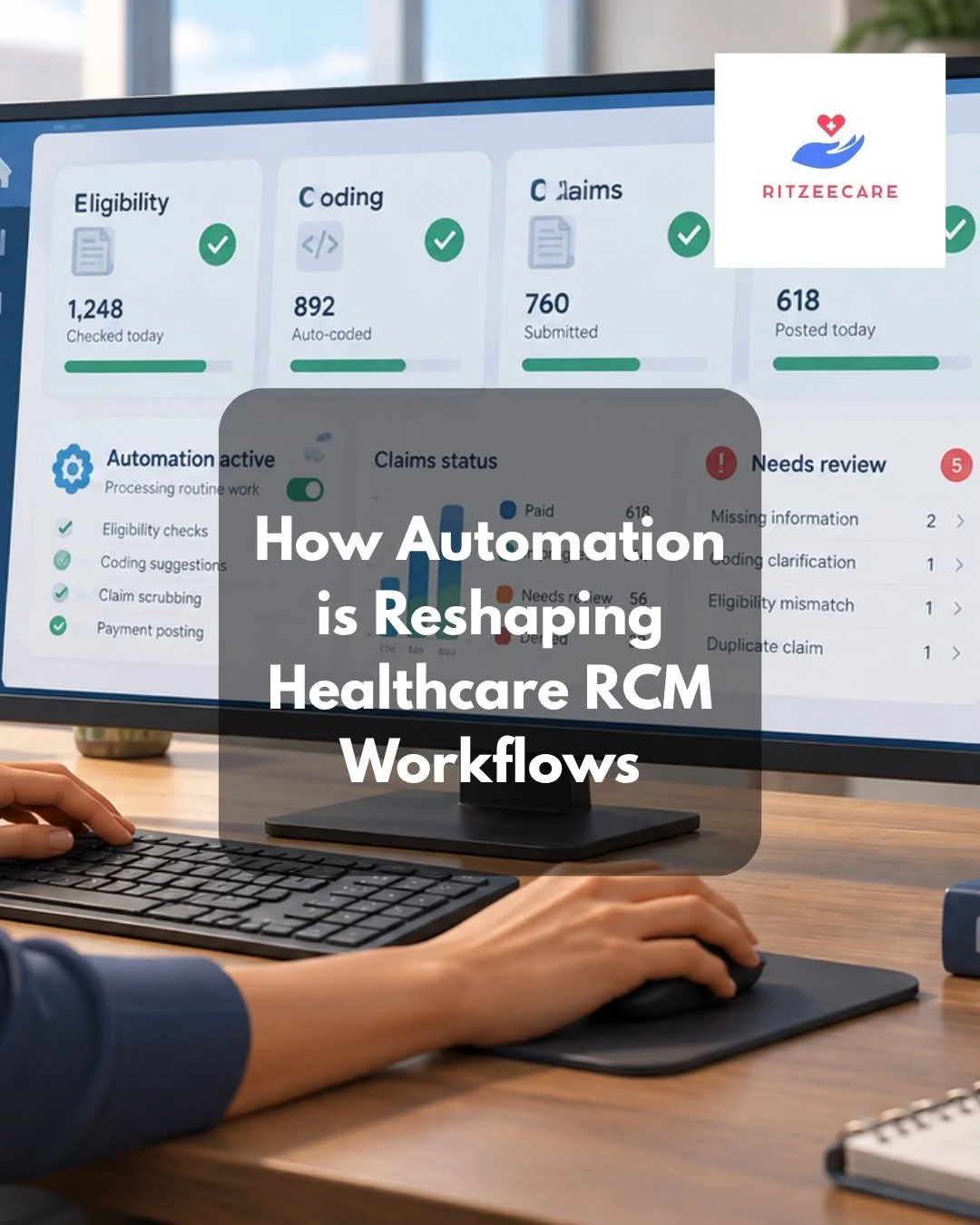
Much of the work behind getting a healthcare claim paid involves small, repetitive steps. Someone checks insurance coverage, reviews claim details, posts a payment, or follows up on an unpaid balance. Each step matters, but handling every one manually can leave staff with less time for problems that require a closer look.
Automation is helping healthcare organizations rethink how that work gets done. In revenue cycle management (RCM), its value comes from moving routine tasks forward while making it easier for staff to see where their attention is needed.
Helping Claims Move Forward
Automated tools can support insurance eligibility checks, claim validation, payment posting, and patient billing reminders. They can also flag missing or inconsistent information before a claim is submitted.
For example, a claim review process might identify a missing field and route the account to the right person for correction. That gives staff a chance to address the issue before it leads to a rejection and another round of work.
When routine steps require fewer manual touches, employees have more time for complex accounts, payer disputes, and patient questions.
Making Follow-Up More Focused
An account list tells staff what remains unpaid. A useful workflow helps them decide what to do next.
Automation can help organize denials by reason, prioritize accounts for follow-up, and highlight recurring errors. If the same issue keeps appearing, staff can investigate its cause instead of correcting each account separately.
That visibility can support improvements earlier in the process. A recurring eligibility problem, for instance, may point to a registration step that needs closer review.
Keeping People Involved
Automation depends on accurate information and clear rules. An incorrect rule can repeat the same mistake across many accounts, turning a small problem into a much larger cleanup.
Regular review matters. Staff need to understand what a tool is checking, how exceptions are handled, and when an account requires human judgment.
Patient conversations deserve particular care. A billing reminder may be routine, but a patient who is confused about a balance or needs financial assistance should have a clear way to reach someone who can help.
Starting With a Practical Goal
A useful starting point is one repetitive task with a clear process and a measurable result. Organizations can track whether automation reduces manual work, improves accuracy, or helps accounts move forward sooner.
The strongest workflows give routine work a dependable path and give people enough information to handle the exceptions. That is where automation can make a meaningful difference: less time spent repeating steps and more time spent resolving the issues that hold up payment.
Want to strengthen collections, address unresolved denials, and gain clearer visibility into your revenue cycle?
RitzeeCare helps healthcare practices pursue outstanding insurance balances and manage eligible claim denials through organized payer follow-up, accurate documentation, and transparent reporting.
