

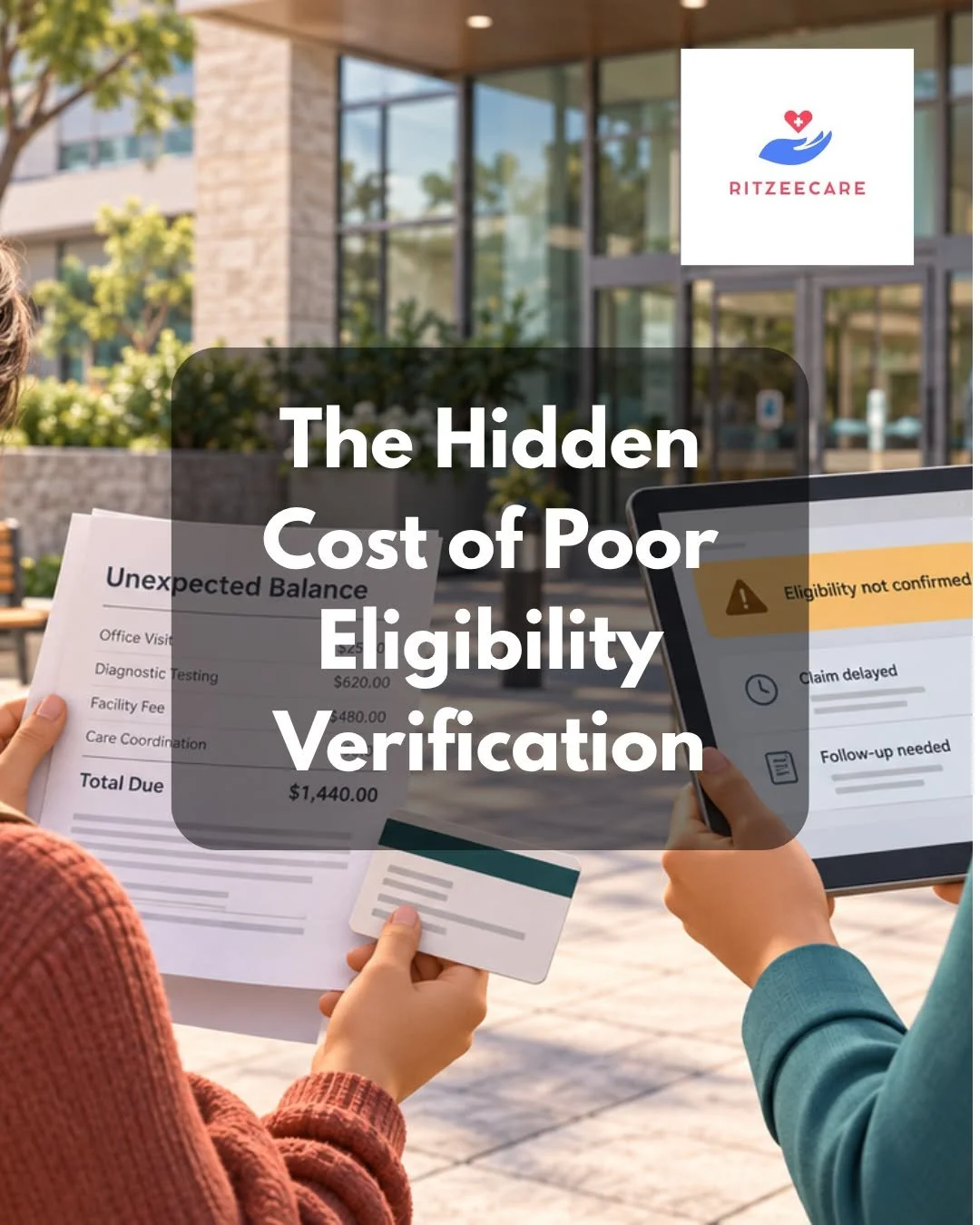
A claim submitted to the wrong insurance plan may take several calls, a correction, and another round of follow-up before it gets paid. Meanwhile, staff are spending time untangling a problem that might have been caught before the appointment.
That is why the cost of poor eligibility verification extends beyond a denied claim. It affects staff workload, payment timelines, and the patient’s experience.
Small Gaps Can Create More Work
An insurance card is a starting point. A practice still needs to confirm that coverage is active and that the plan information on file is accurate.
Other details matter, too. Has the patient changed plans? Is another insurer responsible for paying first? Does the plan cover the scheduled service, and does an authorization need to be obtained?
When these questions go unanswered, billing staff may have to contact the patient, reach the payer, update the account, and resubmit the claim. Each additional step delays resolution and takes attention away from other work.
If an issue remains unresolved long enough, the practice may also miss a filing deadline and lose the opportunity to collect payment.
Patients Feel the Impact
Patients often rely on the practice to help them understand what they may owe. Incomplete information about deductibles, copayments, or network participation can make those conversations less reliable.
An unexpected bill can leave a patient wondering why the issue was not raised before the visit. Even when the balance is valid, explaining it afterward may require more time and create avoidable frustration.
Clear communication starts with checking the available information and being honest about its limits. A cost estimate should be presented as an estimate, with an explanation that the final amount depends on how the claim is processed.
Build Verification Into the Daily Workflow
A consistent process gives staff a better chance to identify discrepancies while there is still time to address them.
Useful steps include:
Checking coverage close to the appointment.
Confirming the patient’s details and current insurance information.
Reviewing benefits relevant to the scheduled service.
Confirming network participation.
Checking which insurer pays first when multiple plans are involved.
Reviewing any authorization requirements.
Recording what was checked and flagging unresolved questions.
Active coverage alone does not guarantee payment. Eligibility and authorization checks address different requirements, so both need attention when applicable.
Give Unresolved Issues a Clear Next Step
Finding a discrepancy is only useful if someone knows what to do with it.
Staff need a clear process for routing questions, contacting patients, and documenting updates. Otherwise, an account can move from registration to billing with the same unanswered question attached.
For example, if two insurance plans are listed and the payment order is unclear, the account should have an assigned follow-up step. A vague note such as “insurance issue” leaves the next person starting from scratch.
Look at the Rework, Too
Practices can learn a lot by reviewing claims that required corrections after an eligibility check.
Which details were missed? Were the results difficult to interpret? Did staff identify the problem but lack a clear way to resolve it?
Those questions can reveal opportunities to improve the process. Reviewing recurring issues also helps distinguish an occasional mistake from a gap that affects many accounts.
A dependable eligibility process supports clearer patient conversations and fewer avoidable billing problems. Its value shows up in the calls staff do not have to repeat, the claims they do not have to correct, and the questions patients can ask before a bill arrives.
What eligibility issue creates the most follow-up work in your practice?
Want to strengthen collections, address unresolved denials, and gain clearer visibility into your revenue cycle?
RitzeeCare helps healthcare practices pursue outstanding insurance balances and manage eligible claim denials through organized payer follow-up, accurate documentation, and transparent reporting.
